
The Great Dane
Great Dane History
It is not officially known exactly when the Great Dane first graced the earth, however, coins dated back to BC have the image of a dog with similarity to the Great Dane. It is commonly believed that the Great Dane originated in Germany, originally bred for hunting purposes.
The "Boar Hound" was one of the names used in the past before the breed was commonly referred to as what we know it to be today - The Great Dane.
Average life span
8 - 10 Years
Average size and weight
Bitch: 71cm, 50kg
Dog: 76cm, 60kg
Temperament
Affectionate, loyal, gentle, compatible with other pets
Exercise requirements
It is commonly believed the Great Dane requires a lot of exercise, however this is not the case. The Great Dane requires a moderate level of exercise when fully grown, and very little whilst still a puppy due to their exceptionally quick growth.
Colouring
The Great Dane comes in many colours, however some are not acceptable for showing in Australia.
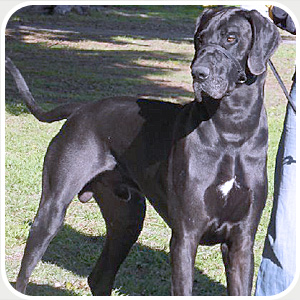 |
BlackGlossy black as illustrated here by Leo. White markings are not desirable for showing.
|
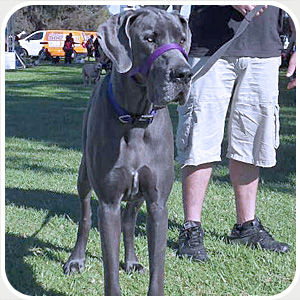 |
BlueColour varies from light grey to deep slate, modelled here by Jade. |
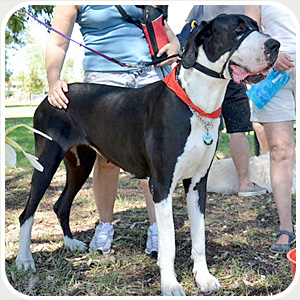 |
Boston/MantleAs demonstrated by Malika, black & white with a solid black blanket extending |
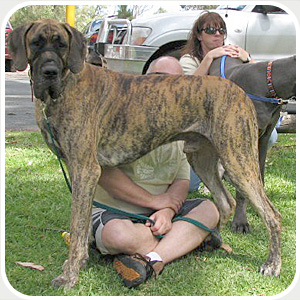 |
BrindleBase colour of yellow gold with strong black cross stripes, ably illustrated here by Seamus. |
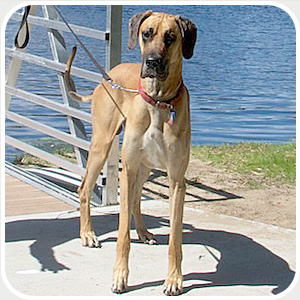 |
FawnDemonstrated in this case by Redmond, yellow gold with a black mask. |
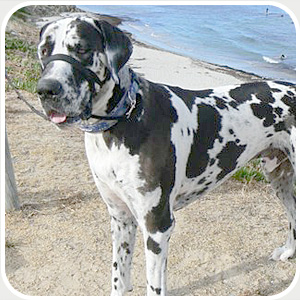 |
Harlequin/Blue HarlequinHarlequin - base colour of pure white with black or blue torn patches |
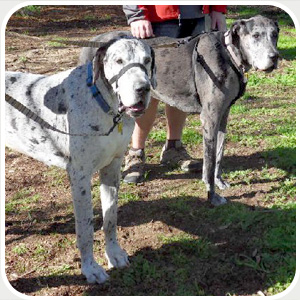 |
MerleGenerally blue and grey or black and grey and can be spots, patches and strips. Spots are demonstrated here by Clifton and Millie. |